Most cloud cost problems do not start with one bad resource.
They start with a simple operating gap:
The bill is growing, but ownership is unclear.
Before you hire a FinOps consultant or buy another platform, run a structured review. You want to know what is running, who owns it, what is idle, what is oversized, and where AI/GPU/LLM usage is quietly changing the economics.
This is the practical map I would use.
Quick visual map
Evidence status: this is a synthetic owner-readiness template, not a client case study. Use the downloadable owner-review CSV and demo board to decide what is safe to inspect before credentials, invoices or production access are shared.
Download the cloud-cost owner-review CSV Open the demo owner board
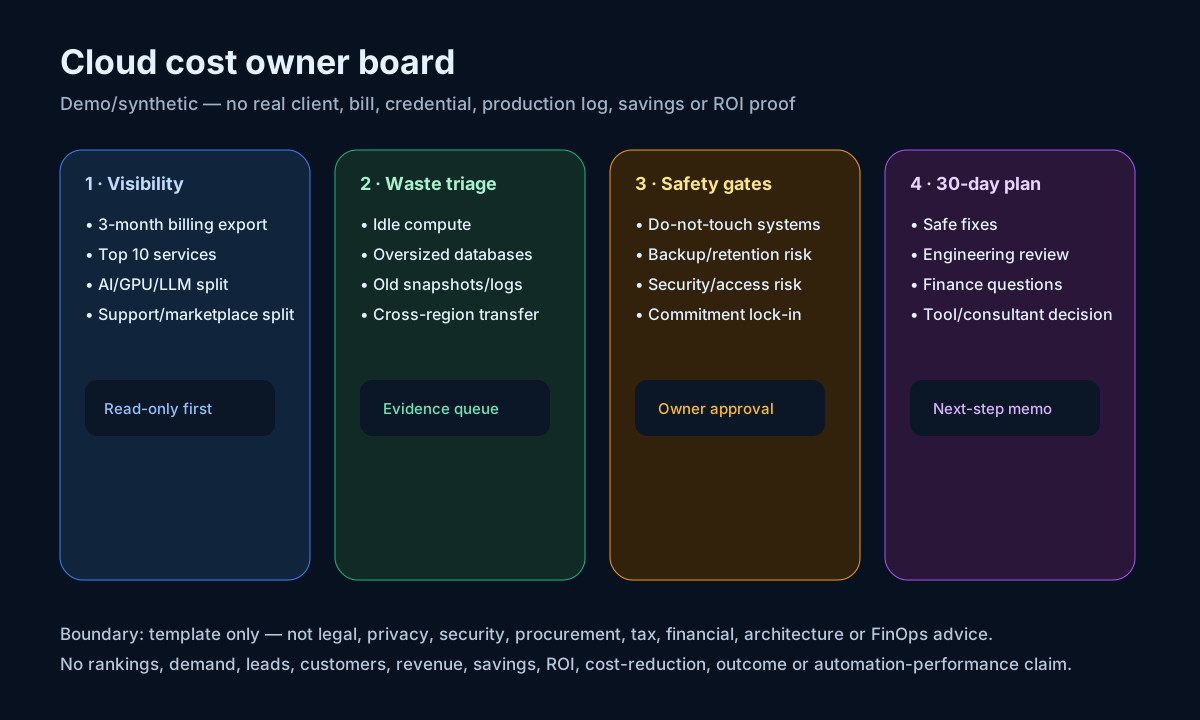
The 12-area checklist
1. Billing visibility
If the bill is unclear, the problem will stay unclear.
2. Budgets and alerts
A cost leak is painful. A surprise cost leak is worse.
3. Resource ownership
Cloud waste often survives because nobody owns the resource.
4. Idle compute
Compute is one of the easiest places to waste money.
5. Oversized resources
Teams often choose larger instances “to be safe” and never come back to review them.
6. Storage and snapshots
Storage waste feels small until it compounds.
7. Network and data transfer
Egress and cross-zone traffic can quietly hurt margins.
8. AI, LLM, and GPU costs
AI spend needs its own review because usage patterns can change fast.
9. Commitments and discounts
Discounts help only after usage is understood.
10. Security and access cost risk
Cost control and trust control are connected. A weak account can become both a security risk and a billing risk.
11. Backup and recovery
Cutting cost should not break recovery.
12. Lightweight governance
Small teams do not need heavy governance. They need lightweight owner control.
A simple first review structure
Keep the first review focused:
1. Export the last 3 months of billing data.
2. List the top 10 services by cost.
3. Identify unowned or untagged resources.
4. Check idle and oversized compute.
5. Review storage, snapshots, and logs.
6. Separate AI/GPU/LLM costs from normal cloud costs.
7. Create a 30-day action list.
8. Do not make production changes without owner approval.
What good output looks like
A useful review should produce more than a spreadsheet. It should give the business owner a simple decision map:
Proof boundary and owner approval gate
Use boundary: this page and its downloads are synthetic/readiness templates only; no real client or customer evidence is included. No cloud bill, invoice, personal data, customer data, production data, credentials, secrets, API keys, production logs, architecture export, vendor portal export or private FinOps evidence is included.
Claim boundary: no rankings, demand, leads, customers, revenue, savings, ROI, cost-reduction, outcome or automation-performance results are claimed until Raj has real evidence. No legal, privacy, security, procurement, tax, financial, architecture or FinOps advice is provided.
Owner review / approval gate: stop before any change that can affect production, commitments, retention, backups, security controls, customer-facing systems or regulated data. Use this checklist to assign a human owner and decide what can be reviewed read-only before consultant, platform or migration spend.
Final thought
Cloud cost control is not only a technical exercise. It is an operating discipline.
The best first step is not panic-cutting resources. It is making cloud spend visible, owned, and reviewable.
AICloudStrategist offers a free Cloud Cost & AI/GPU Waste Review for startups and growing businesses. We focus on safe, read-only review first: visibility, waste map, risk flags, and a clear action plan.
Turn this checklist into a fixed-scope diagnostic
If the first pass shows unowned spend, idle compute, AI/GPU/LLM cost spikes or unclear approval gates, route the buyer to a no-credentials diagnostic before FinOps consultant, platform, commitment or migration spend.
- Free fit check: use the public review form to confirm whether a read-only, redacted review is appropriate.
- Paid diagnostic path: use the fixed-scope Cloud & AI FinOps diagnostic menu for scope, owner evidence, handoff plan and written proposal boundaries.
- Safety boundary: no production changes, credentials, savings promises, compliance proof or architecture advice are included until separately scoped and approved.
Request the free cloud-cost fit check See fixed-scope cloud diagnostics Open Cloud & AI FinOps service
Website: https://aicloudstrategist.com/
No lock-in. No migration required. No guaranteed savings claim before review — just a structured way to find where the money and risk may be leaking.